
Unlocking Potential: Why Disability Representation Matters in the Boardroom
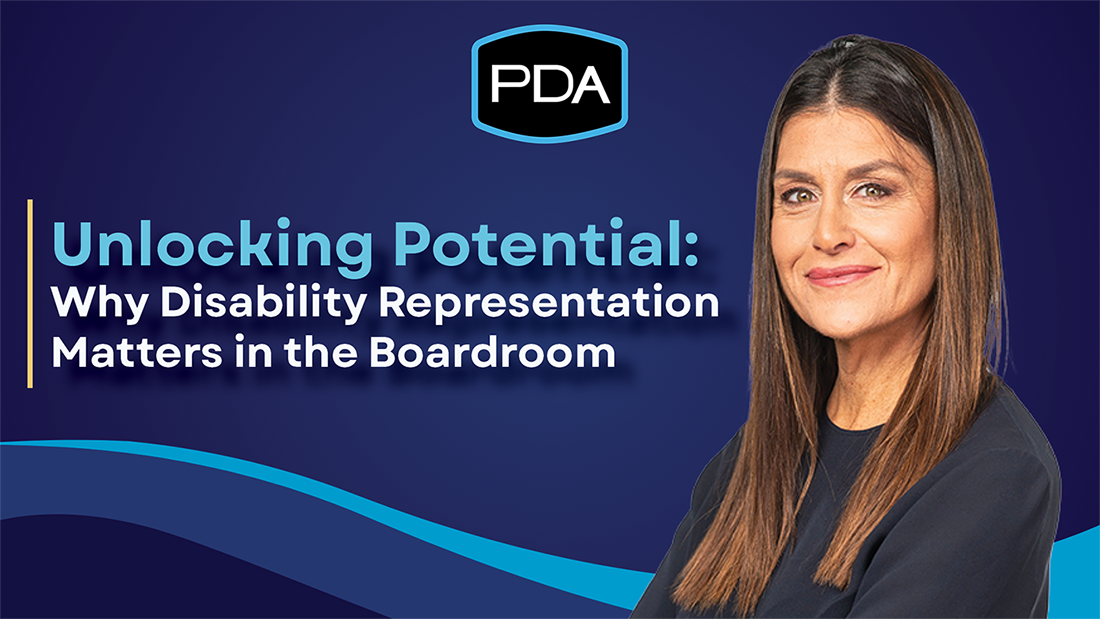
By Catherine Nelson
PDA National Board Member
When my father, a devoted physician, became disabled, our family’s world shifted. Though he could no longer practice medicine, his mind remained sharp—brimming with insight, creativity, and wisdom. Watching him adapt to new challenges revealed to me a powerful truth: disability is not a limitation but a lens through which new solutions, innovations, and resilience emerge.
That lesson has shaped my view on corporate governance. People with disabilities bring unique experiences, sharpened problem-solving skills, and deep empathy—qualities that can enrich boardroom discussions and strengthen decision-making. Inclusion isn’t about accommodation; it’s about unlocking untapped talent that reflects the diverse society businesses serve.
Disability representation on boards signals a company’s commitment to inclusive values and can drive stronger connections with customers and employees alike. It also fosters cultures of belonging—where innovation thrives.
Research supports this. Accenture’s Getting to Equal (2018) and The Disability Inclusion Imperative (2023) make a compelling business case for inclusion. Harvard Business Review (2023) affirms that disability is a competitive advantage, offering human-centered logic and alternative thinking to strategic conversations. Ted Kennedy Jr. aptly said, “Including disability diversity in the corporate boardroom would mark a major turning point for disability rights and have the single largest impact on the economic independence and quality of life for millions.”
Despite this, representation remains scarce. According to the World Bank, over 1 billion people—15% of the global population—live with a disability. Among working-age adults, that’s 386 million individuals. Yet only 18% of countries constitutionally protect their right to work. In parts of the developing world, unemployment for people with disabilities nears 90% (United Nations, 2022). This exclusion echoes in boardrooms across the globe.
In a report, Global Boardroom Diversity: Legal Findings on Disability & Diversity, Disability:IN and TrustLaw (2023) found that few jurisdictions around the world mandate companies to reveal whether their boards include individuals with disabilities.
A memorandum by Morgan, Lewis, & Bockius LLP argues that disability-inclusive boards are better positioned for responsible governance, effective risk management, and improved alignment with stakeholders. The legal and business case is clear: representation enhances transparency, decision quality, and long-term value.
Ultimately, this isn’t just about optics—it’s about shifting mindsets, expanding perspectives, and building leadership that reflects the full spectrum of human experience. My father’s legacy reminds me that insight comes in many forms—and when we make room at the table, we all rise together.